Tell the world
It is heartbreaking to see the war in Ukraine. Every day, countless innocent people are killed, and 4.3 million have fled the country. We are shocked by the human tragedy unfolding and deeply disturbed by the suffering that this causes animals.
Many times, animals are the forgotten victims of conflicts and wars.
Notably, the zoo animals of Ukraine are caught up in a terrible conflict without their knowledge. Some zoos have stated that they will euthanize many animals. This has prompted a dismaying outcry and is rightly so.
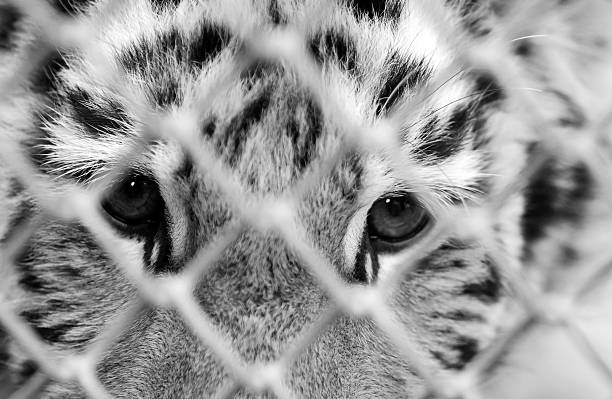
Zoo animals can be trapped by design. For the benefit of paying visitors, they are forced to live in enclosures. It can lead to disaster when the squares they live in are unsafe, and their income is reduced, as we saw in Ukraine.
While the Geneva Conventions emphasize humanitarian rights during war, animals’ rights are not considered. Zoos, which were initially set up for entertainment, can become battlefields in conflicts. Animals are held captive and cannot flee, yet they are regularly attacked. Both animals and civilians both deserve protection.
Many animals have been injured or killed in attacks. It is hazardous for humans and animals to escape, especially in urban areas. Animals can also become stressed and traumatized by the loud noises and sights from war. This can be seen at Kyiv Zoo, where animals are given sedatives and sometimes moved underground, so their keepers are there for comfort.
This situation isn’t uncommon and doesn’t just present during wars. Similar circumstances were recently seen with the covid pandemic. The crisis in Thailand caused a severe decline in international tourism and left many attractions empty. The layoff of thousands of workers followed the closure of tourist camps that housed captive elephants. Owners of the country’s more than 2,000 captive elephants were left in an unstable situation, unable to provide primary care such as food and healthcare.
Animals are made dependent upon humans when taken from their natural habitat. This is a fact.
We could help in Thailand as we had done in the past. In times of emergency, we assisted many elephants. This is, unfortunately, a lot more complicated when it comes to war.
First, in war-stricken areas, there are shortages and supply problems. Giant cats and carnivores require large amounts of meat that is difficult to find.
It can also be challenging to reach the premises. It’s also hazardous. The fact compounds this there are no safe routes. The risk of severe illness and even death can be caused by transporting stressed animals through conflict zones. Mobile cages are another option for special transport. We see zoos being shelled, as they are located right in the firing line. People who come in to help animals or provide supplies can also be at risk.
The third challenge is finding safe spaces for hundreds of animals when there are so many zoos. For example, the Mykolaiv Zoo, located in an area where fighting can occur, houses 4,000 wild animals of 200 species. Wild animals are complex creatures that require long-term care. This is a challenging task and a costly commitment.
These are only a few of the many factors you should consider. They are not an exhaustive list.
Recently, we helped to fund the rescue and transport of Masha, a former circus bear from Ukraine. She was taken to AMP, our partner sanctuary in Romania, after a life of cruelty. Although it was difficult to rescue her, she made it to the cover. It was a fantastic sight to see her enjoying her new freedom. Tragically, her long-awaited retirement was cut short when she suffered a stroke three weeks after arriving. Although it could have been due to her age or poor health, we cannot rule out the stress of such a complex and challenging journey. We are grateful she received the best care in her final weeks. Masha died surrounded by nature as if it was the wild. Behind the scenes, we are looking into ways to rescue other animals – there is no quick fix for such volatile situations. Masha’s sad story shows how moving animals can present challenges.
We all hope for the best for wild animals at zoos or aquariums. This is an unfortunate situation and serves to remind us all why wild animals should be kept free from captivity. It would be better to gradually end keeping wild animals in captivity for commercial exploitation so that such terrible situations do not happen again.
The Ukraine illustrates the peril of placing wild animals in captivity, leaving them vulnerable to human-caused violence and other human-caused events. We need a future in which wild animals live a hectic life and are not held captive.